Choke Points and Coupled Fronts: The Systemic Anatomy of the 2026 Hormuz Crisis
The 2026 Hormuz crisis shows how one disrupted passage can turn energy, food, water, logistics, and finance into a single resilience problem for actors far beyond the immediate conflict zone.
Strategic Tension
How should leaders think about resilience when a single choke point can transmit pressure across energy, food, logistics, water, and capital faster than most institutions can adapt?
Executive Summary
This page expands Coupling and maps the structural interaction between fronts, capital constraints, and survival-boundary decisions.
Strategic Anchors
In plain language
The Hormuz crisis shows how one narrow passage can turn energy, food, water, logistics, and finance into the same resilience problem.
Executive takeaway
If critical flows share one choke point, resilience depends on buffers, visibility, and alternative pathways built before disruption begins.
Framing
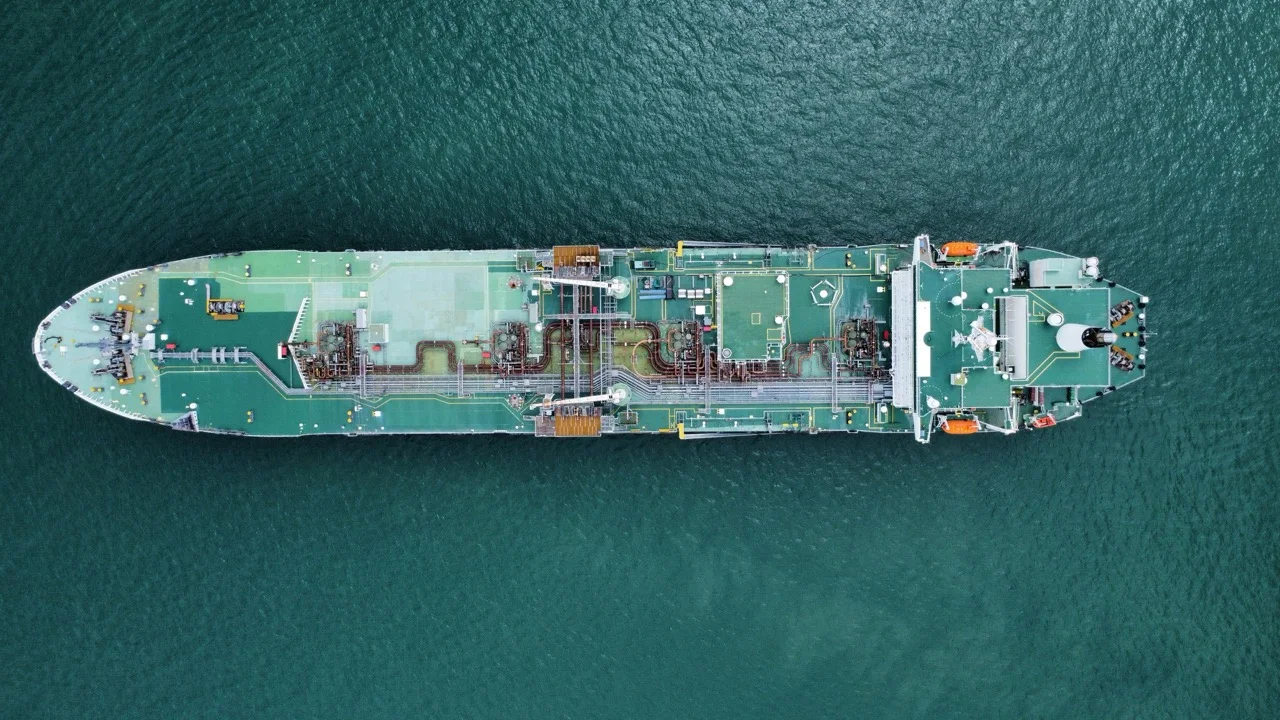
The Strait of Hormuz matters because it concentrates too many critical flows in one place. A large share of seaborne oil, major LNG exports, fertilizer trade, and food imports for highly import-dependent Gulf states move through the same maritime passage. When military conflict disrupted that route in early 2026, the effects did not stay local.
Within days, the crisis was visible in energy prices, fertilizer costs, freight disruption, inflation expectations, and policy responses well beyond the Gulf. Actors with no role in the conflict still found themselves operating under tighter constraints.
That is why the crisis is analytically useful for AoE. It is not simply a geopolitical event. It is a live demonstration of how choke points convert localized disruption into coupled systemic pressure.
Maritime choke point
A choke point with stacked dependencies
The structural issue is concentration across multiple domains at once.
| Domain | Core dependency | Why coupling matters |
|---|---|---|
| Energy | Oil and LNG exports pass through the same corridor | Export revenue, utility costs, and industrial input prices move together |
| Food | Gulf food imports and fertilizer flows depend on the route | Food security pressure and agricultural cost pressure interact |
| Water | Desalination systems depend on energy and imported inputs | Energy disruption spills into civil resilience |
| Logistics | Shared ports, insurers, vessels, and schedules carry multiple flows | Delay or closure in one stream impairs the others |
This is what makes Hormuz more than a transport story. Revenue from energy helps finance imports. Fertilizer availability shapes food economics far beyond the region. Desalination depends on stable power and continued supply of inputs. Once those dependencies are stacked on the same corridor, disruption stops behaving linearly.
The anatomy of disruption
The disruption worked through several channels at once.
The first was direct physical risk. Vessel transit became dangerous enough to change routing decisions and operating assumptions.
The second was insurance. Even when a voyage remained technically possible, war-risk coverage and premium escalation altered the commercial logic of moving through the area.
The third was logistics coordination. Carriers, ports, freight planners, and importers do not operate as isolated decision-makers. Once enough nodes suspend, delay, or reduce activity, the network itself begins to seize.
That is why the crisis was not just a partial degradation. It behaved more like a sharp contraction in the reliability of the corridor as a whole.
How pressure propagated
Energy
Oil and LNG exposure transmitted immediately into fuel prices, utility costs, shipping expense, and inflation expectations. The energy front therefore did not remain confined to producers and refiners. It spread into fiscal planning, industrial margins, and central-bank decision environments.
Food and fertilizers
The crisis also mattered because fertilizer and food systems are tightly tied to the same region. Higher fertilizer prices feed into crop economics, and timing matters. If disruption hits during planting windows, the problem stops being a short-term price event and starts affecting future harvest outcomes.
Industrial and logistics systems
Petrochemical and industrial supply chains faced knock-on effects through plastics, feedstocks, shipping schedules, and rerouting costs. When logistics systems lengthen routes or suspend normal patterns, entropy rises across firms that must decide which commitments to honor, which inventories to protect, and which customers to disappoint.
Financial conditions
The financial front reflected all the others. Higher uncertainty, inflation pressure, currency effects, and tighter growth assumptions changed the room that both firms and governments had to respond.
Constraint structure and collapse of optionality
The most important AoE feature of the crisis is constraint structure.
Gulf states depended on the same corridor for export earnings, food imports, and support for critical civil systems. Asian importers were exposed through energy dependence. European actors faced energy and industrial repercussions at a time when storage and macro conditions were already tight. Food-importing countries with weak fiscal room faced price pressure without the same ability to cushion households.
The result was a broad collapse in optionality.
Actions that might have been available under calmer conditions became slower, more expensive, or simply unavailable on crisis timescales. Alternative routes were limited. Strategic reserves helped but did not eliminate dependency. Emergency policy measures bought time but did not redesign the architecture that made the shock so transmissible in the first place.
Entropy drag at system scale
Entropy drag is often described at the firm level, but Hormuz shows it at systemic scale.
For firms, entropy drag appeared in emergency routing, insurance cost spikes, delayed inputs, reprioritized shipments, and executive attention diverted toward continuity management.
For governments, entropy drag appeared in emergency reserve releases, diplomatic coordination, subsidy pressure, and repeated policy adjustments under uncertainty.
For households, entropy drag appeared as higher prices, scarcity anxiety, and reduced confidence in the continuity of basic goods and services.
The burden was not evenly distributed. Actors with more reserves, more diversification, and more fiscal room could absorb the same shock longer. Actors with thinner buffers faced painful trade-offs earlier.
A semi-formal AoE view
Let the main fronts be:
- E = energy disruption
- F = food and fertilizer disruption
- L = logistics disruption
- I = infrastructure and water vulnerability
- K = financial stress
Then:
Systemic Stress ~= Sum of front pressure + coupling effects + entropy drag
The crisis becomes especially severe when disruption in L affects both E and F, when E weakens I, and when all of them intensify K. Under those conditions, leadership is not managing five separate problems. It is managing one system whose fronts happen to show up in different reporting categories.
Structural observations
1. Choke point vulnerability is systemic
The danger is not in the passage alone. The danger is in how many critical flows have been concentrated through it.
2. Exposure analysis often understates real risk
Organizations that evaluate energy, food, logistics, or finance separately usually understate the interaction load that appears during real disruption.
3. Optionality must pre-exist the shock
Reserves, diversified suppliers, alternative routing, and redundancy cannot be improvised at full speed once the corridor is already under stress.
4. Propagation speed is itself a strategic variable
In tightly coupled systems, the timeline between trigger and full-system consequences is often too short for slow governance routines.
Executive Implication
If your operating model depends on a choke point, resilience is not a matter of hoping the route stays open. It is a matter of building buffers, alternate pathways, and faster visibility before the route fails. Once the fronts are coupled in real time, the main problem is no longer efficiency. It is continuity under shrinking options.
Executive Discipline Check
- Which core concept does this expand? Coupling and optionality collapse in a systemic crisis built around a strategic choke point.
- What multi-front interaction is illustrated? Energy, food, logistics, infrastructure, and finance intensify one another through shared dependence on the same corridor.
- Where is capital constrained? Capital is constrained by higher transport and energy costs, policy burden, reserve use, and reduced macro flexibility.
- Where does velocity matter? Velocity matters in sensing, rerouting, releasing reserves, and adjusting policy before the pressure shifts from disruption to broader instability.
- What is the survival boundary? The boundary appears when actors exhaust buffers before alternative flows, supply relationships, or policy responses can stabilize the system.
- What is the executive implication? Treat choke points as coupled resilience problems and invest in redundancy before disruption reveals the true cost of concentration.
Sources
- U.S. Energy Information Administration material on Strait of Hormuz oil and gas flows.
- UN Trade and Development reports on Hormuz disruption and trade effects (2026).
- Federal Reserve Bank of Dallas analysis on the global economic implications of a Hormuz closure (2026).
- World Economic Forum analysis on commodities and logistics affected by the crisis (2026).
- Council on Foreign Relations analysis on food, water, and fertilizer exposure in the Gulf (2026).
- Arabian Gulf States Institute material on water and food security under Gulf militarization (2026).
Reader Signal
Send a signal from your context
If this analysis connects with a live pattern, missing reference, or case we should examine, send a short note to the editorial intake.
Cross-Linked Intelligence
Framework: Multi-Front Coupling
Concurrent fronts are not additive; coupling effects create nonlinear load that can outpace planning assumptions.
Open insightFramework: Dynamic Strategic Risk
Risk exposure is a moving target because strategic decisions recursively reshape future probability structures and resource states.
Open insightCase: Ukraine and Multi-Front Survival
Ukraine is an Architecture of Endurance case on multi-front survival, showing how military, energy, finance, information, and alliance pressure forced adaptation velocity to stay above systemic burn.
Open insightTalk to us about this analysis
If this signal maps a live pressure environment, use the executive intake to continue the conversation under confidentiality.