When the Founder Comes Back: Flexport and the Second Crisis
Flexport shows how leadership transition, demand reset, valuation compression, customer signal, and tariff shock can form two linked crisis cycles rather than one isolated turnaround story.
Case Context
Flexport is useful because it reveals a harder form of corporate strain than the one most turnaround narratives describe. The company did not face one clean crisis with a visible beginning and end. It moved through two linked crisis cycles.
The first cycle was internal: leadership transition, valuation compression, layoffs, and loss of organizational coherence. The second was external: the 2025 tariff shock, collapse in China-related freight volumes, and the prospect that many customers would not survive the year in anything like their prior form.
Read through an Architecture of Endurance lens, the case is not mainly about whether the founder should or should not return. It is about what happens when one crisis is still being metabolized while the next one begins to test the structural changes made during recovery.
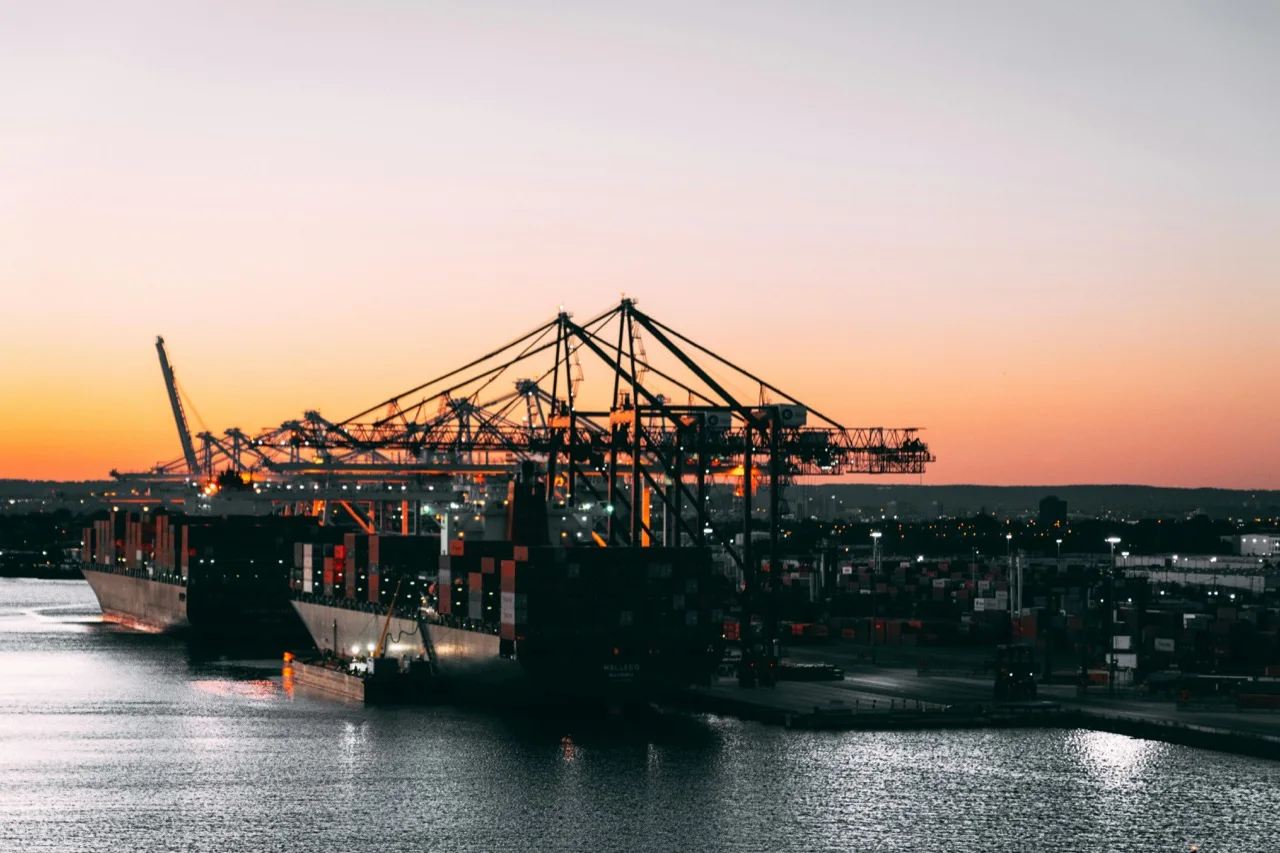
Logistics under compression
Front Map
Swipe to inspect details or tap to expand
Flexport Front Map
Diagram Access
Case Front Map
Open the full-screen view to inspect labels, coupling paths, and threshold relationships without crowding the mobile reading flow.
The first crisis cycle
Flexport's early growth thesis was credible. Freight forwarding and customs management still operated with high friction while customers increasingly expected real-time visibility and software-grade coordination. Capital supported that thesis aggressively, and the company scaled fast into a larger logistics ambition.
That speed created its own pressure geometry.
- Growth expanded headcount, scope, and internal coordination burden.
- Pandemic-era freight conditions that had helped growth began to normalize.
- Cost structure had been built for a stronger volume environment than the company would actually face.
- Investor sentiment changed rapidly as the market reset its tolerance for growth without discipline.
The leadership handoff to Dave Clark looked rational at first glance. A company at scale might benefit from an operator who had managed large systems before. The deeper issue was that the transition introduced a structural mismatch between organizational identity and operating logic. Flexport had been built around founder judgment, customer intimacy, and fast interpretive moves under uncertainty. A more process-heavy operating style entered exactly as external conditions deteriorated.
That did not create a single point of failure. It created a coupled one.
Leadership mismatch made coordination harder. Market normalization weakened the commercial base. Valuation compression changed recruiting, morale, and capital perception. Layoffs and executive churn added noise at the moment when the organization most needed a stable operating signal.
Why the founder return mattered
Founder return stories are often treated as personality dramas. This case is better understood as signal restoration.
Under pressure, organizations lose more than cash or growth. They lose signal quality. Priorities become less legible, decisions propagate more slowly, and the distance between what leadership intends and what the organization actually does starts to widen.
Petersen's return mattered because it reduced interpretive ambiguity. He did not solve every front at once. What he restored was a clearer sense of what the company was for, which customers mattered most, and which capabilities deserved protection while the firm cut back elsewhere.
That distinction matters in AoE terms.
The relevant variable was not charisma. It was whether the company could lower entropy fast enough to preserve enough effective capital for the next round of decisions.
The second crisis
By early 2025, Flexport had recovered some stability. Revenue had improved, cost posture was tighter, and leadership had regained a clearer line of control. Then the tariff shock hit.
The new U.S. tariff escalation against Chinese goods changed the operating field for global trade almost immediately. China-linked ocean bookings collapsed across the industry, and a freight company heavily exposed to that corridor could not treat the problem as a temporary pricing issue. If the flow stopped, the revenue base moved with it.
This is where the earlier restructuring became decisive.
During the first crisis cycle, Petersen had not limited the response to layoffs and cash preservation. Flexport had also widened geographic exposure across Southeast Asia, India, and Mexico. That was costly to do while the company was still under internal strain, but it changed the next crisis before the next crisis arrived.
That is the enduring lesson. Optionality built during recovery is worth more than optionality deferred until conditions feel safe again.
The customer as a sensing system
One of the strongest parts of the case is how direct customer contact functioned as a second nervous system during the tariff shock.
Petersen reportedly spent substantial time speaking directly with customers as the disruption unfolded. That matters because aggregated dashboards rarely show the real speed of stress migration across customers, sectors, and supplier bases. Direct conversation reveals whether clients are pausing orders, shifting origin countries, delaying commitments, or moving toward insolvency before those signals fully settle into formal reporting.
For executive teams, this is a crucial distinction.
Data tells you what has happened. Ground-level signal often tells you what the organization will have to manage next.
In multi-front conditions, leadership that loses direct access to customer reality is often running slower than the crisis itself.
What the pattern reveals
The Flexport case surfaces a set of structural lessons.
1. Coupled fronts require sequence, not one-shot solutions
Leadership transition, commercial reset, valuation pressure, and tariff shock were not solved with one master move. The work was sequential. Reduce the most dangerous coupling first, then create enough room to address the next one.
2. Recovery should be treated as preparation
The period after the first crisis was not a return to normal. It was a narrow window in which the company could still decide what kind of optionality it wanted to own before the next external shock closed the window again.
3. Founder advantage is often identity clarity
The founder does not necessarily return with superior formal process. The founder may return with a clearer internal model of what the enterprise exists to protect and how its signal should be read.
4. Customers often see the crisis before the hierarchy does
If customer conversations are delayed, filtered, or abstracted, leadership may believe the system has more runway than it actually does.
Executive Implication
Do not judge recovery by whether the company has stopped falling. Judge it by whether the company has reduced the dependencies that the next crisis will exploit. If the first crisis only produces cuts and not structural redesign, the second crisis will usually arrive with a cleaner target.
What This Case Shows
- Dynamic strategic risk often arrives as linked cycles, not one clean crisis with a clean recovery.
- Leadership transition, commercial reset, valuation compression, customer signal, and tariff shock can reinforce one another across time.
- Capital is constrained by weaker growth assumptions and the need to keep restructuring while protecting operating capability.
- Velocity matters in restoring signal quality, absorbing customer truth quickly, and widening geographic options before the next external shock hardens.
- The leadership implication is to use recovery periods to build optionality, reduce coupling, and restore direct sensing before the next pressure front activates.
Sources
- Reuters coverage on Flexport layoffs, leadership transition, tariff impact, and Ryan Petersen remarks (2023-2025).
- Public statements and interviews by Ryan Petersen and Flexport (2023-2025).
- Coverage of the Shopify Logistics acquisition, leadership handoff, and subsequent restructuring.
If this resembles your situation, start with a pressure map.
AoE Case Intelligence translates a live situation into active fronts, coupling dynamics, option constraints, and the first sequence of decisions that should be governed.
Executive takeaway
After the first crisis, leadership should assume the second one will attack whatever structural dependency recovery left in place.
Reader Signal
Send a signal from your context
If this analysis connects with a live pattern, missing reference, or case we should examine, send a short note to the editorial intake.
Cross-Linked Intelligence
Framework: Dynamic Strategic Risk
Risk exposure is a moving target because strategic decisions recursively reshape future probability structures and resource states.
Open insightFramework: Entropy and Effective Capital
Organizations fail when they confuse nominal resources with deployable resources after friction, latency, and coordination drag.
Open insightBriefing: Entropy in Crisis Leadership
Crisis leadership fails less from lack of intent than from decision latency, narrative fragmentation, and coordination drag.
Open insightTalk to us about this analysis
If this signal maps a live pressure environment, use the executive intake to continue the conversation under confidentiality.